Salt-driven corrosion of embedded steel
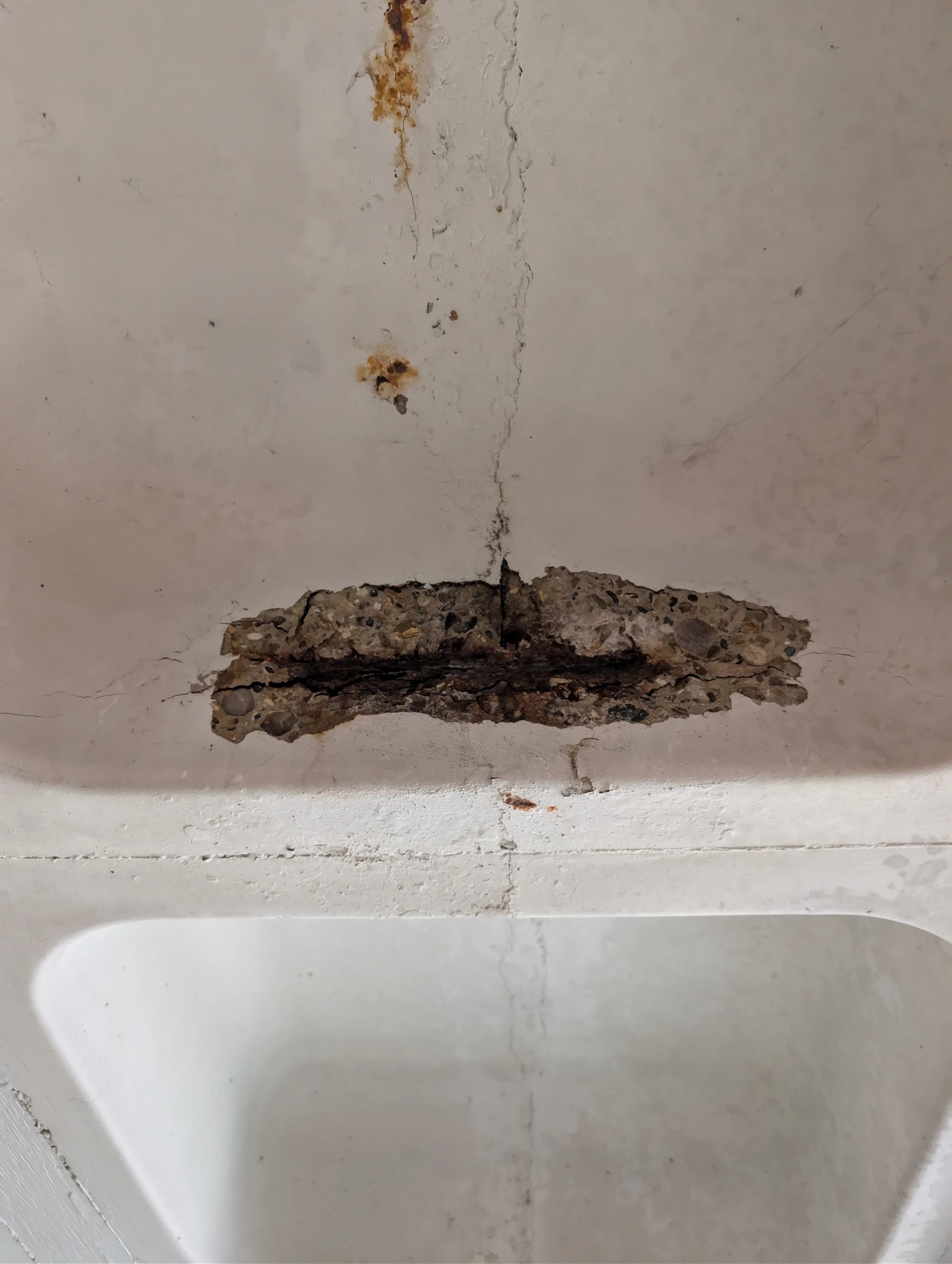
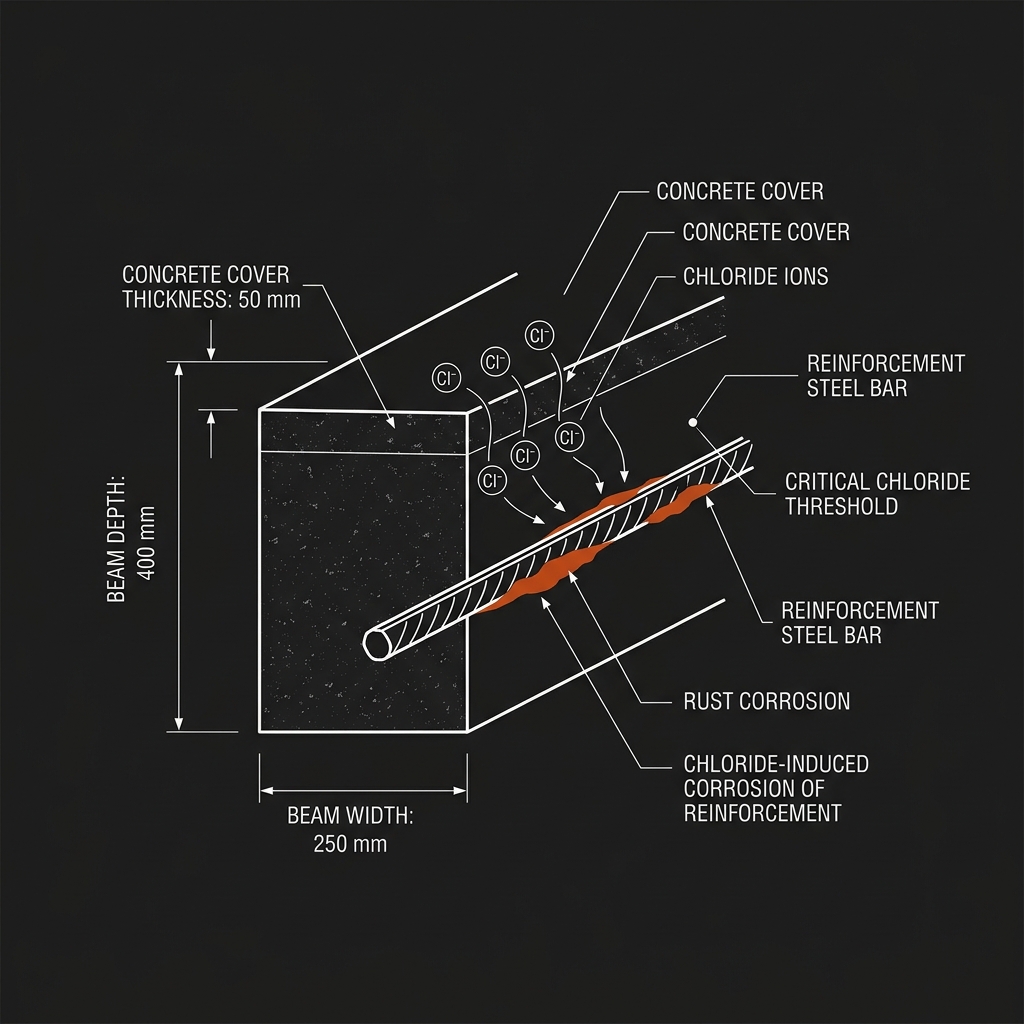
Chloride ions (from marine environments, de-icing salts, or contaminated aggregates in older concrete) migrate through the concrete cover until they reach the reinforcement. Above a critical concentration, they destroy the natural alkaline passive film that protects the steel, and corrosion accelerates rapidly.
Where it comes from
- 01Marine and coastal exposure (splash and spray zones)
- 02De-icing salts on car park decks and bridge structures
- 03Chloride-contaminated aggregates in older (pre-1977) concrete
- 04Industrial chloride process contamination
What you might see on site
- Localised rust staining and cracking along the line of reinforcement
- Spalling of concrete cover with exposed corroded bars
- Delamination detected by hammer-tap survey
- Pitting corrosion of the reinforcement itself
How we investigate
- T · 01Cover surveys with a cover meter to establish depth to steel
- T · 02Half-cell potential mapping to locate active corrosion cells
- T · 03Core sampling with chloride ion titration to a profile
- T · 04Resistivity testing to gauge corrosion risk
How we put it right
Repair is a combination of removing the source and treating the mechanism. Chloride-contaminated concrete around the affected bar is broken out to a minimum of 25 mm behind the steel, the reinforcement is cleaned to bare metal (SA 2½) and primed with a zinc-rich passivating coating. The area is reinstated in an EN 1504-3 R4 repair mortar. For widespread contamination, galvanic or impressed-current cathodic protection is advised.
Recommended Fosroc products

High-strength, fibre-reinforced hand-applied repair mortar

Single-component zinc-rich epoxy primer for exposed reinforcement

Protective coating against CO₂, chlorides and moisture