
// What it is
Expansion, softening and loss of strength
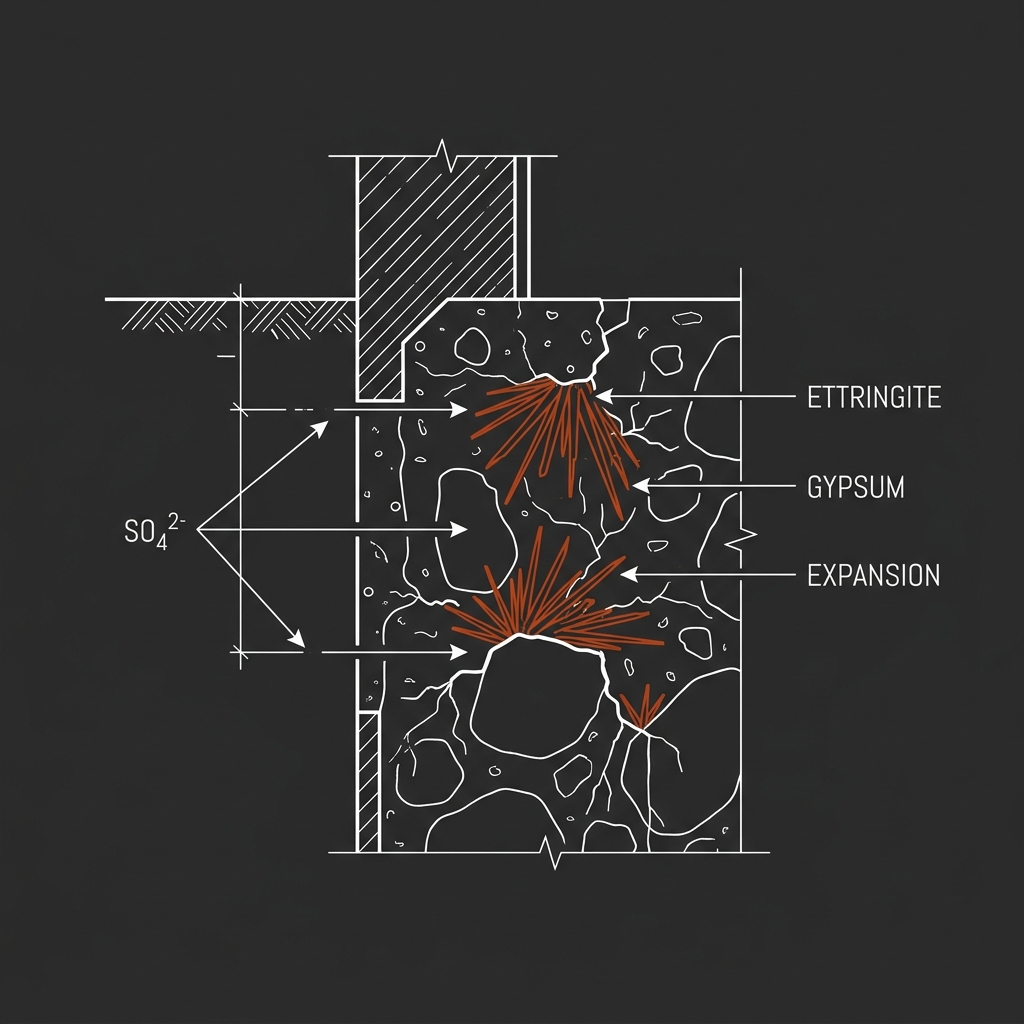
Sulphates in ground water, industrial effluent or contaminated soil react with the calcium hydroxide and calcium aluminate hydrates in Portland cement, forming gypsum and expansive ettringite. The result is progressive expansion, cracking, softening and eventual disintegration of the concrete.
// Causes
Where it comes from
- 01Sulphate-bearing ground water (particularly on brownfield and industrial sites)
- 02Pyrite oxidation in fill material generating sulphates in situ
- 03Sea-water contact
- 04Delayed Ettringite Formation (DEF) in concrete cast at high temperature
// Symptoms
What you might see on site
- Softening and 'sugaring' of the concrete surface
- Expansion, cracks with white efflorescence at the edges
- Loss of aggregate-paste bond visible on broken faces
- Concrete progressively losing strength on core testing
// Diagnosis
How we investigate
- T · 01Chemical analysis of the concrete for sulphate content
- T · 02Analysis of ground water sulphate class (BRE SD1 / BS 8500)
- T · 03Petrographic examination for ettringite and gypsum crystals
- T · 04Compressive strength testing on cores to quantify strength loss
// Repair
How we put it right
Sulphate attack is typically bulk deterioration rather than localised. Options range from replacing badly affected concrete with a sulphate-resistant mix (SRC or CEM III), applying a physical barrier to prevent further sulphate contact, and treating the source (drainage, soil replacement). Repair mortars must be sulphate-resistant grade to survive the environment.

